Paneer Tikka
The Making of Paneer Tikka
P
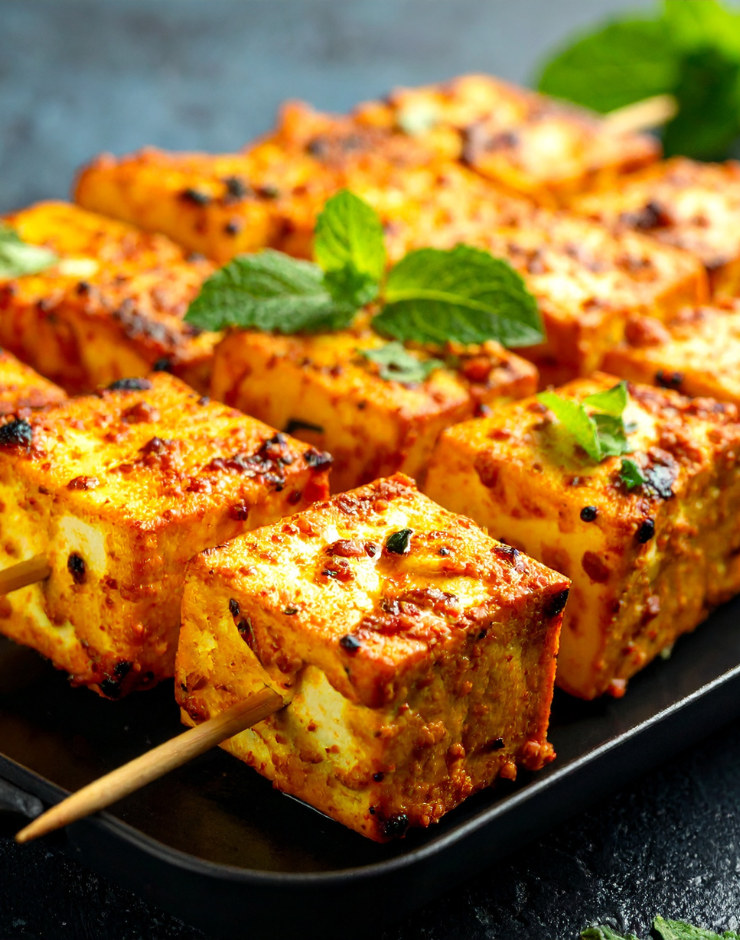
Paneer Tikka is a popular Indian starter made with marinated paneer cubes grilled or pan-roasted until smoky and golden. It is rich in flavor, high in protein, and easy to prepare at home without a tandoor.
Start by cutting paneer into medium-sized cubes. The cubes should not be too small, otherwise they may break while cooking. Keep the paneer aside and prepare the marinade.
In a bowl, add thick curd, ginger-garlic paste, red chilli powder, turmeric, garam masala, chaat masala, coriander powder, cumin powder, lemon juice, mustard oil, and salt. Mix everything well until a smooth and thick marinade is formed. Thick curd is important so the marinade coats the paneer properly.
Add the paneer cubes to the marinade gently. You can also add capsicum, onion, and tomato cubes if you like. Mix carefully so the paneer does not break. Cover the bowl and let it marinate for at least 30 minutes. For best flavor, marinate for 2 hours.
Heat a grill pan or non-stick pan on medium heat. Add a little oil and place the marinated paneer pieces on the pan. Cook them slowly, turning each side so they cook evenly. Paneer should develop a golden crust without burning.
If you want a smoky flavor, lightly char the paneer on high heat for a few seconds at the end. You can also give a dhungar effect by placing a hot charcoal in a bowl inside the pan and adding a little ghee, then covering it for 2 minutes.
Once cooked, remove the paneer tikka and sprinkle chaat masala and lemon juice on top. Garnish with mint leaves.
Paneer Tikka tastes best when served hot with mint chutney, onion rings, and lemon wedges. It can be served as a starter or wrapped inside a roti to make a delicious paneer roll.pular rice varieties grown in Punjab include Basmati rice (such as Pusa Basmati and Traditional Basmati) and non-basmati varieties like PR 126 and PR 121.
Basmati rice from Punjab is especially famous worldwide for its long grains, aroma, and taste. It is widely exported to countries in the Middle East, Europe, and the United States. Non-basmati rice, on the other hand, is mainly produced for domestic consumption and government procurement through the Minimum Support Price (MSP) system.
Modern farming practices such as mechanized transplanting, laser land leveling, and the use of certified seeds have increased productivity. However, rice cultivation in Punjab also faces serious challenges. Excessive groundwater extraction has led to rapid depletion of water tables, making rice farming unsustainable in the long run. The practice of stubble burning after harvest causes severe air pollution in North India, especially during winter.
To address these issues, the government and agricultural experts are promoting direct-seeded rice (DSR), crop diversification, and water-saving technologies. Farmers are also being encouraged to shift some land to crops like maize, pulses, and oilseeds.
In conclusion, rice cultivation remains the backbone of Punjab’s agriculture, supporting millions of farmers and feeding a large population. However, sustainable practices and policy reforms are essential to protect natural resources and ensure the future of farming in the state.